
DIGITIZING THE CORPORATE ARCHIVE
When one thinks of an archive, it often conjures an image of a dusty place where it is difficult to understand its value or access its contents unless you are a professional in the field. In most cases, however, archives contain assets that can be transformed into value for the company—information that is otherwise hard to reach and consequently rarely consulted.
The very inaccessibility of these hidden contents contrasts with the expectations of each of us, who carry a smartphone daily, granting access to the web and its many apps for work, leisure, and free time. It is clear that our lifestyles have changed—think of social media as an essential corporate communication tool, or the emerging topic of IoT, and the extraordinary possibility to connect to everything and everyone.
It has long been evident that this social and technological transformation calls for a general reflection on the opportunities offered by innovation, such as online newspapers, e-commerce portals, training, and corporate strategies and marketing, which now prudently leverage the web, considering new media as the primary tools for both internal and external communication.
The idea is to create a sort of “big data of the past” from corporate documents, enriching the universe of internet content.
Evidence of this is the explosion of online content—a phenomenon that creates countless opportunities but at the same time overshadows the limited content from the past. This is because the web is crowded with recent content and news covering the last 25–30 years, while only notable events from the past emerge—the milestones that marked the start of the digital future earlier.
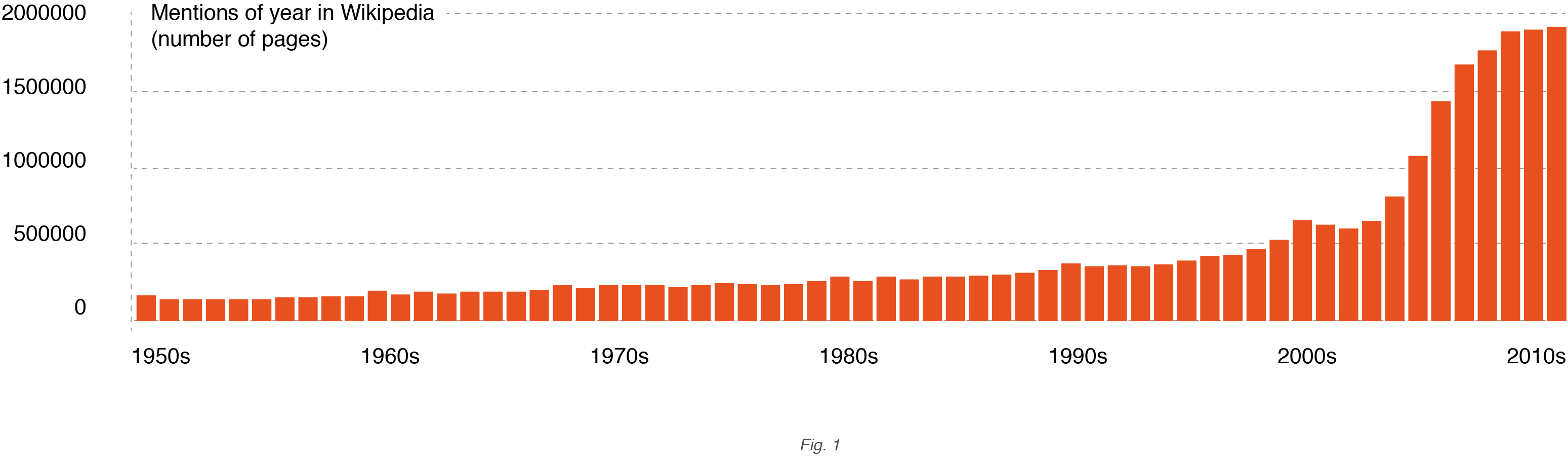
This phenomenon is illustrated in the graph showing the trend of increasing online content (fig.1). Observing it, it is clear that the volume of information about the past grew linearly with a low growth rate until the 2000s; from that point onward, the curve becomes exponential. This is due to the fact that native digital data is immediately available and that tools like smartphones and the cloud simplify access to this data.
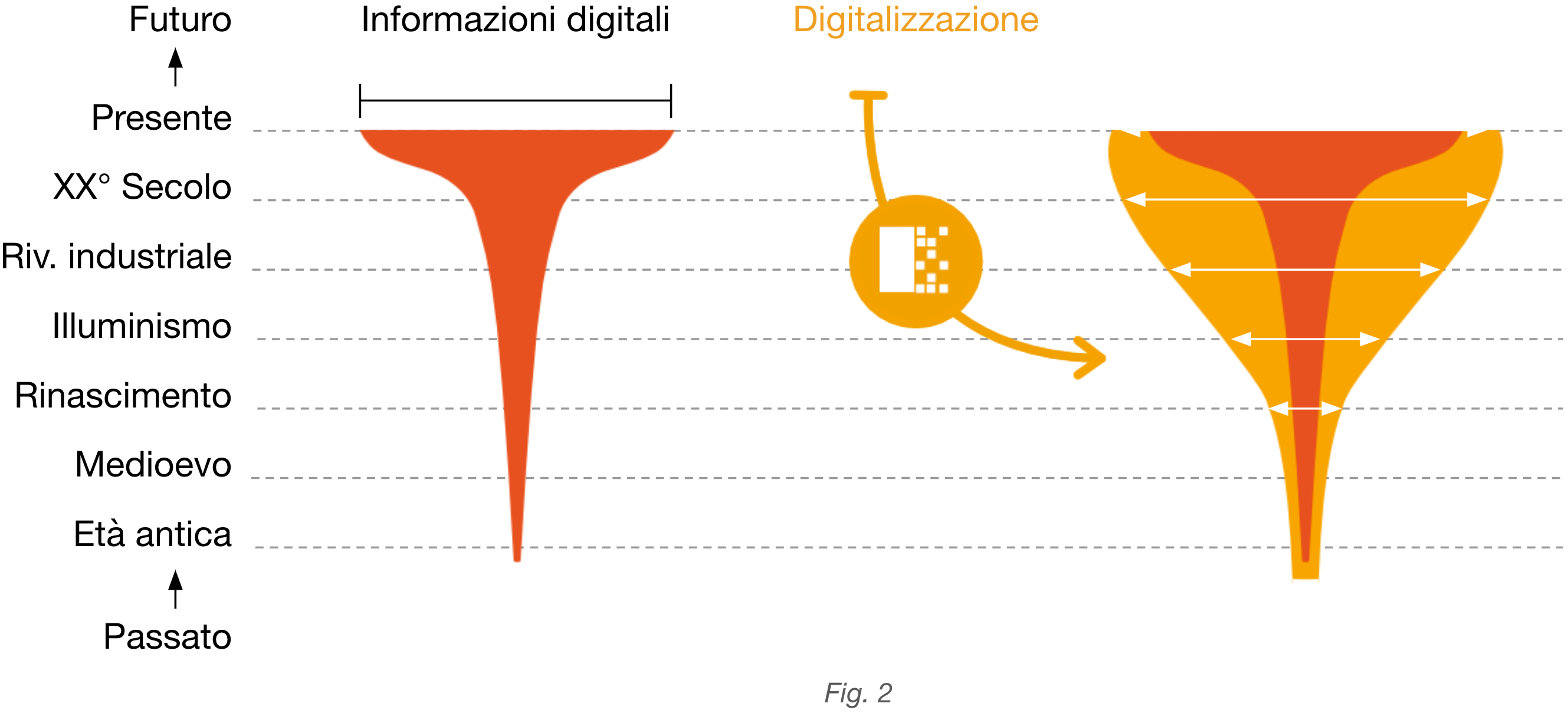
How, then, is it possible to ensure that the past is also properly represented? In the graph shown in figure 2, called the Information Mushroom, the effect of digitizing the “hidden” contents in archives is simulated. On the left side, it can be seen that the previous graph (fig. 1) has been flipped and mirrored to illustrate a mushroom with a narrow stem and a very wide cap. On the right side, a new chalice-like shape is proposed, widening the base as a result of digitizing historical documents.